

Service Dog Training in Ithaca, NY
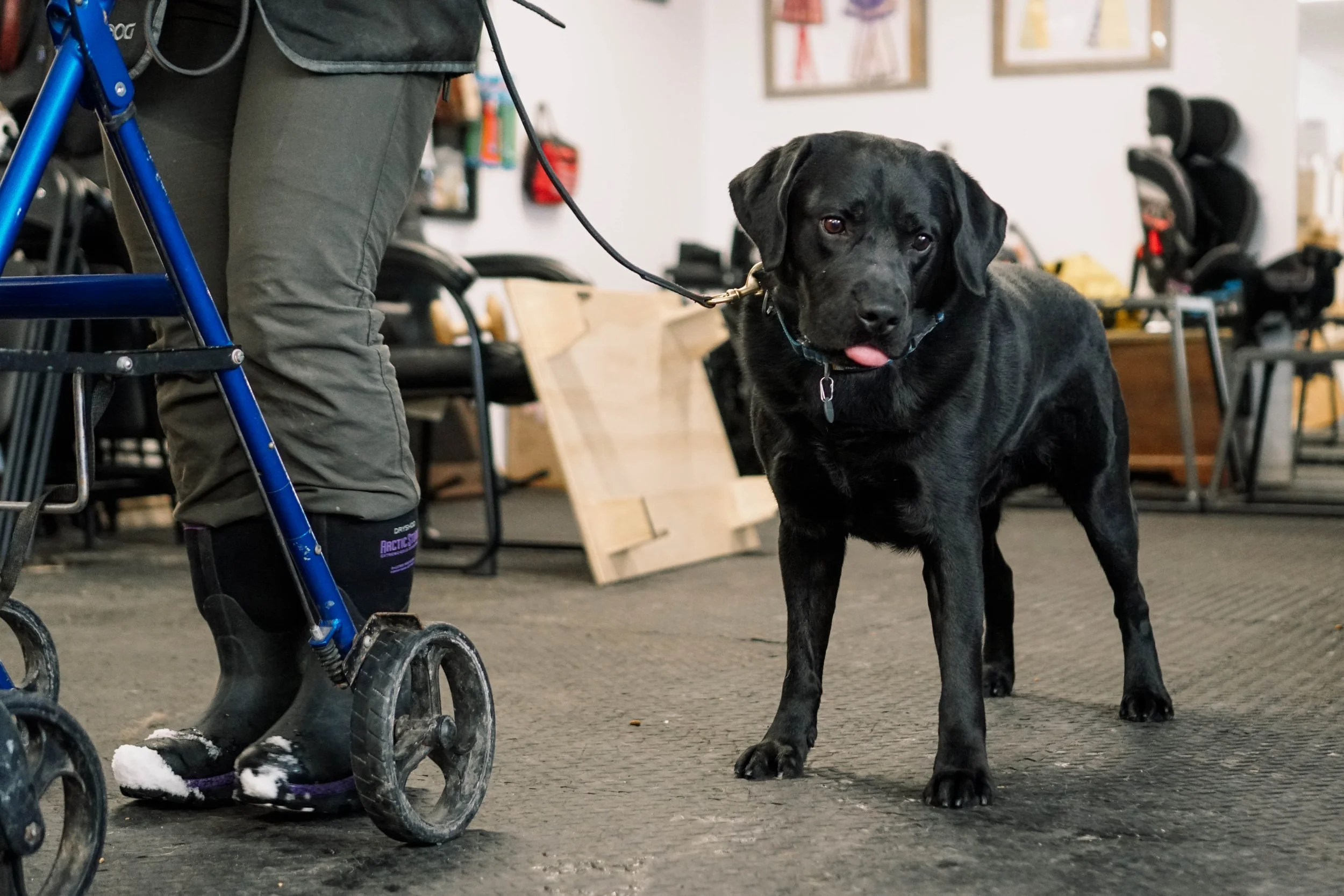
BUILDING INDEPENDENCE, ONE TEAM AT A TIME.
At High Peaks Canine, I know a service dog is more than a well-trained companion. A properly trained service dog performs specific disability-related tasks that can help provide greater independence, accessibility, safety, and confidence in everyday life.
As a service dog handler myself, I understand how important it is to build a strong working partnership between a dog and their handler.
Our Service Dog Programs are designed to provide individualized training and support while preparing both the dog and handler for the realities of working together as a service dog team.
What we work on:
Every service dog team has different needs. Training is individualized based on the handler's needs, the dog's suitability, and the tasks they'll be expected to perform.
Depending on the program, training may include:
Foundation & Advanced Obedience: Building reliable obedience, impulse control, engagement, and communication.
Public Access Training: Developing appropriate behavior, neutrality, and reliability around people, animals, and everyday distractions.
Disability-Related Task Training: Teaching specific tasks directly related to the handler's disability.
Environmental Exposure: Building confidence and reliability across different environments and real-world situations.
Handler Education & Team Training: Helping handlers develop the skills needed to communicate with their dogs and work together successfully.
What Is a Service Dog?
Under the Americans with Disabilities Act (ADA), a service animal is a dog that has been individually trained to do work or perform tasks for an individual with a disability.
The work or tasks performed by the dog must be directly related to the person's disability.
Examples may include:
Guiding a person who is blind or has low vision
Alerting a person who is deaf or hard of hearing
Retrieving medication or other necessary items
Assisting with mobility
Alerting to certain medical events
Assisting an individual during a seizure
Interrupting disability-related behaviors
Performing trained tasks to assist an individual with a psychiatric disability
Psychiatric service dogs are service dogs when they are individually trained to perform specific work or tasks that mitigate their handler's disability.
Have questions about certification, owner training, or the difference between service dogs and emotional support animals? Explore the FAQs below.
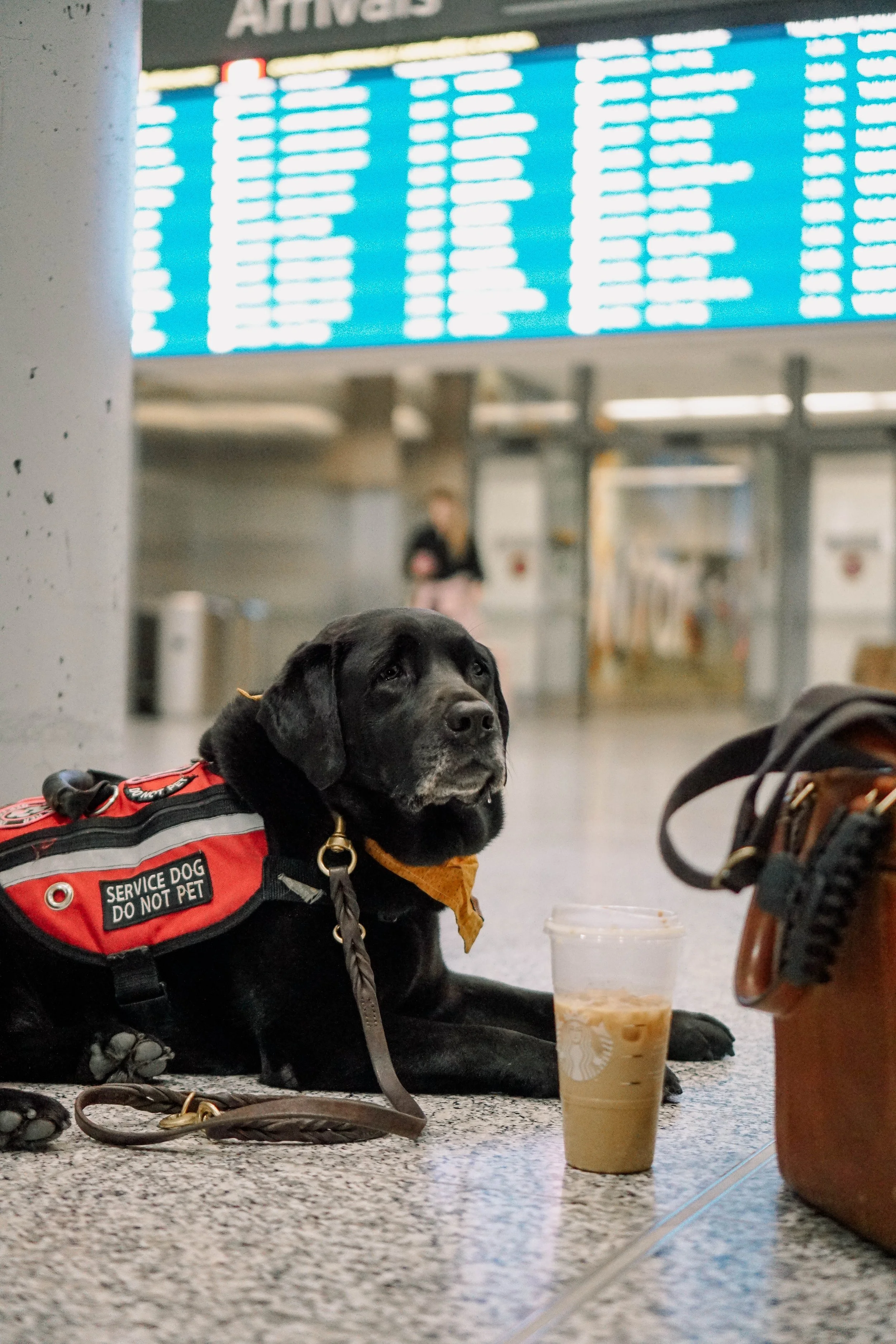
Service Dog Training Programs
Full Program Service Dog
From Selection to Working Partnership
My Full Program is designed for individuals who require a fully trained service dog.
High Peaks Canine selects, raises, socializes, trains, and prepares the dog for the approved handler's specific needs.
Training includes foundation and advanced obedience, public access training, environmental exposure, disability-related task training, handler education, and team training.
The program also includes a structured six-month handler integration period. A service dog may know its skills, but the dog and handler must also learn to function successfully as a team at home, in the community, at work, at school, and in everyday environments.
Training and support continue throughout this process.
Owner-Trained Service Dog Program
Training & Guidance for You and Your Dog
Some individuals may already have a dog they hope to train as their service dog, while others may need help finding an appropriate prospect.
If you already have a dog, I'll first evaluate their temperament, health, behavior, age, and overall suitability for service work.
If you don't currently have a suitable dog, I can assist with breeder research, prospect selection, temperament testing, and evaluating characteristics important for service work.
Once you and your dog are approved, we'll develop an individualized plan that may include obedience, public access skills, environmental confidence, handler education, and disability-related task training.
This is an in-person training program. Service dog training cannot be accomplished solely through online instruction or by passing a single test.
Not every dog is suited for service work, and no puppy or young dog can be guaranteed to successfully complete training.
Service Dog Private Training
Additional Support for Your Service Dog Team
Already training a service dog but need help in a particular area?
Private service dog training may be appropriate for teams who don't require enrollment in a complete program but would benefit from professional guidance with specific training concerns.
Sessions may focus on disability-related task training, public access challenges, environmental confidence, impulse control, advanced obedience, settling in public, and handler communication.
Private training is offered in six-session packages and does not constitute enrollment in or completion of the Full Program or Owner-Trained Service Dog Program.
Need Third-Party Public Access Testing?
High Peaks Canine also offers independent Public Access Testing for service dog teams seeking a formal assessment of their dog's behavior, obedience, handling, and public access skills.
Testing evaluates the team's performance at the time of assessment.
Passing a third-party public access test does not create or grant legal service dog status under the Americans with Disabilities Act (ADA).
How to Get Started
1. Review the Program Information
Take some time to review the programs, training timelines, requirements, and fees. Consider whether a service dog is the right fit for your needs and lifestyle.
Complete the Am I Ready for a Service Dog? questionnaire before beginning the application process.
2. Contact Us & Apply
Reach out to begin the application process. I'll provide the required forms and information about supporting documentation.
Applicants must have a diagnosed disability and provide documentation from an actively involved qualified healthcare provider supporting the use of a service dog.
3. Application Review
Once all required information has been submitted, I'll review your application to determine whether you meet the program's eligibility requirements.
For Owner-Trained Service Dog applicants, the proposed dog must also complete a suitability assessment.
You'll be notified of the outcome following the review.
4. Secure Your Place
Once formally approved, a $2,000 non-refundable deposit is required to secure your place on the waiting list for the Full Program or Owner-Trained Service Dog Program.
This deposit is not required during the application process and does not apply to Service Dog Private Training.
Acceptance and payment of the deposit do not guarantee a particular dog, breeder, litter, or placement date.
fREquently Asked Questions
-
No. The ADA does not require a service dog to be professionally trained. Individuals with disabilities may train their own service dogs.
The ADA also does not require service dogs to be certified, registered, or identified by a particular vest or identification card.
State and local laws may provide additional requirements or protections, including provisions relating to service dogs in training.
-
A service dog is individually trained to perform specific work or tasks directly related to a person's disability.
An Emotional Support Animal (ESA) provides comfort, companionship, or emotional support through its presence.
Providing comfort or emotional support simply by being present is not considered a trained task under the ADA.
For example, a dog whose presence makes someone feel calmer is not, for that reason alone, a service dog.
However, a dog trained to recognize signs of an impending psychiatric episode and take a specific action to mitigate its effects may qualify as a psychiatric service dog.
Emotional Support Animals do not have the same public-access rights as service dogs under the ADA. Different laws and regulations may apply to animals in housing and certain other circumstances.
-
Yes. My Owner-Trained Service Dog Program is designed for individuals who already have a dog they hope to train for service work.
However, acceptance is not automatic. I'll first evaluate your dog's temperament, health, behavior, age, and overall suitability.
Even with careful selection and training, no dog can be guaranteed to successfully complete service dog training.
-
I can assist with researching and contacting appropriate breeders, reviewing prospective breeding pairs and pedigrees, breeder visits when necessary, and evaluating litters or individual dogs.
Prospect evaluations may include temperament testing and assessing confidence, sociability, environmental recovery, engagement, and trainability.
The goal is to help select a prospect based on your individual needs and intended service dog work.
-
No. My Owner-Trained Service Dog Program requires in-person training.
Service dog training cannot be accomplished solely through online instruction or by passing a single test.
Both the dog and handler must demonstrate reliable skills across a variety of environments and situations.
-
The six-month integration period is part of my Full Program Service Dog training.
A service dog may know its skills, but the dog and handler must also learn to function successfully as a team in the handler's home, community, workplace, school, and everyday environments.
Training and support continue throughout this process to help develop a successful working partnership.
-
Yes. For enrollment in my comprehensive Service Dog Programs, applicants must have a diagnosed disability and provide documentation from an actively involved qualified healthcare provider supporting the use of a service dog.
This information helps me understand the applicant's functional needs and determine how a service dog may appropriately assist them.
This is a High Peaks Canine program requirement. The ADA does not require individuals with service dogs to carry or provide medical documentation for general public access.

Ready to Get Started?
Whether you're looking for a fully trained service dog, guidance with your own prospect, or additional training support, I'd love to hear from you.